Customer Service
Top Tips for Home WiFi
We've pulled together some of our most practical and common tips for maximizing your wifi connection by minimizing interferences in your home
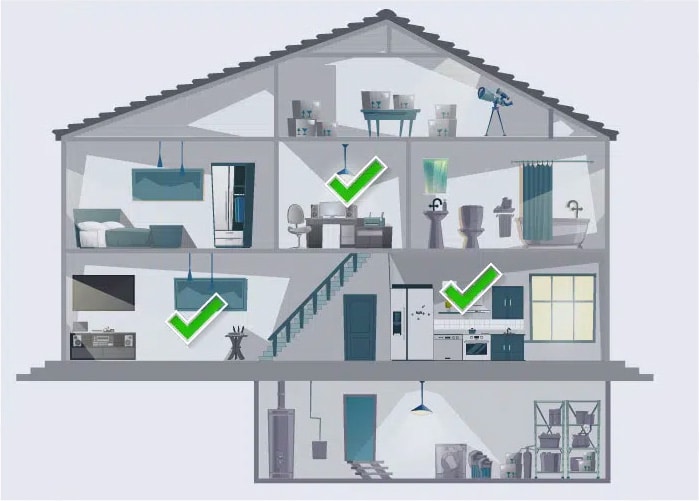
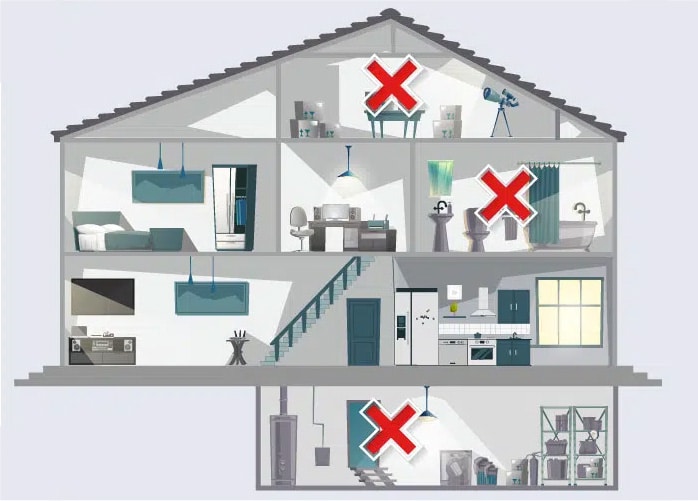
Place the router in high-use areas, like the living room, kitchen, and home office. Avoid areas like the basement and attic.
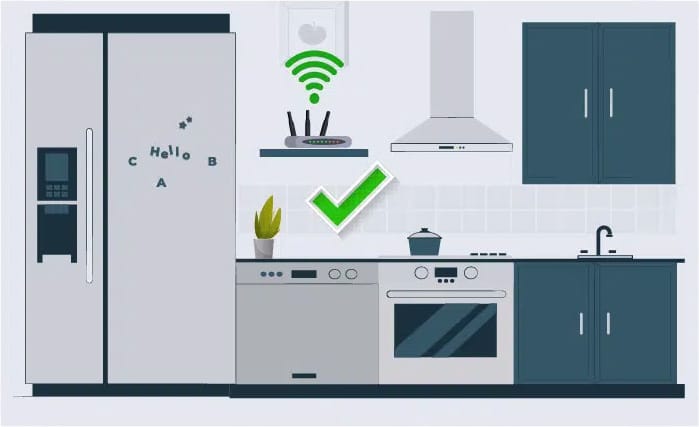
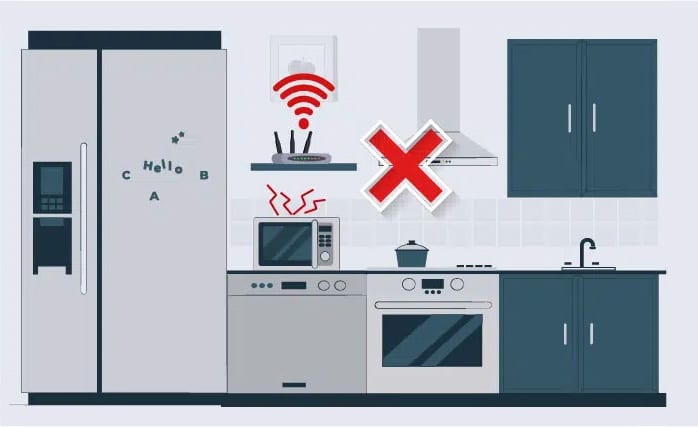
Be mindful of other devices that emit electronic radiation, and don't place the router too close to microwaves, radios, etc.
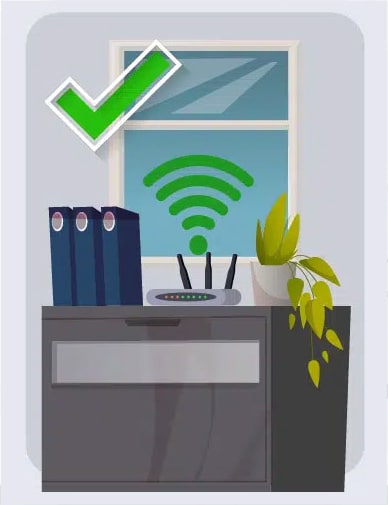
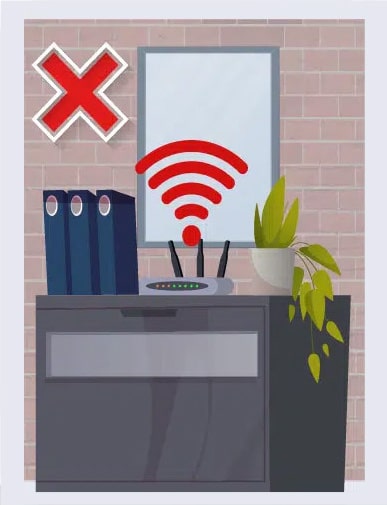
Materials like brick, tile, mirrors, and metal may interfere with your signal. Windows are okay and will not impact your signal.
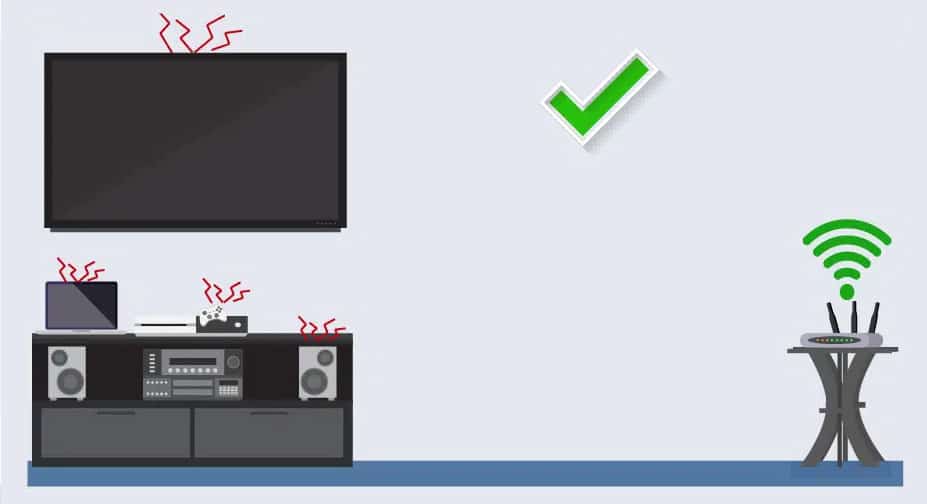
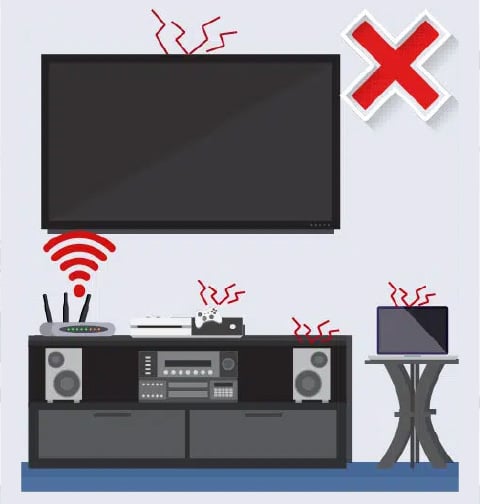
Place your router away from other Bluetooth devices. These can interfere with the transmission of data between your devices and the router.
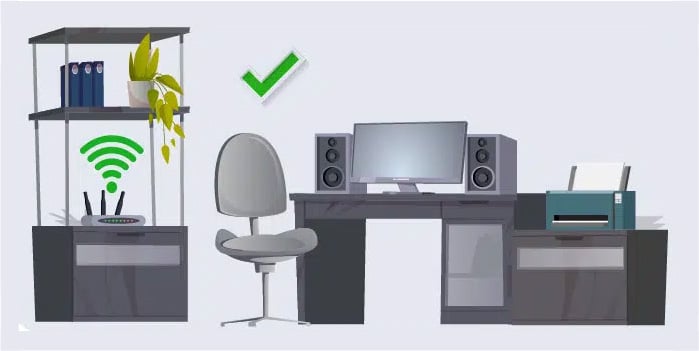
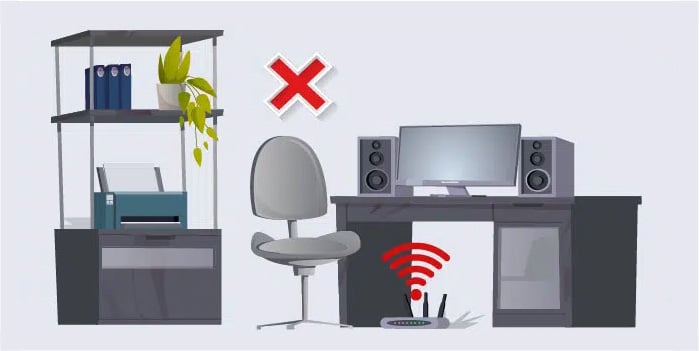
Place your router in an open space.
Avoid placing under furniture or in closets.
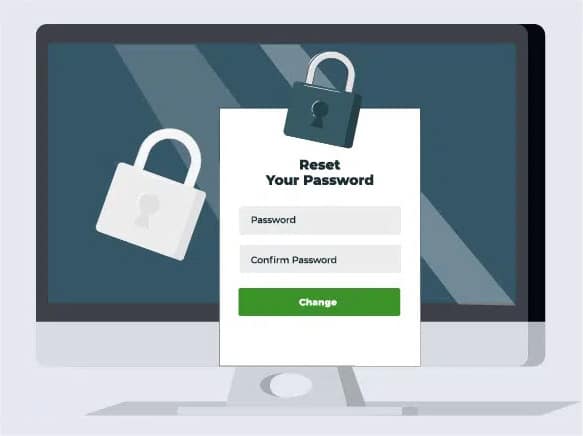
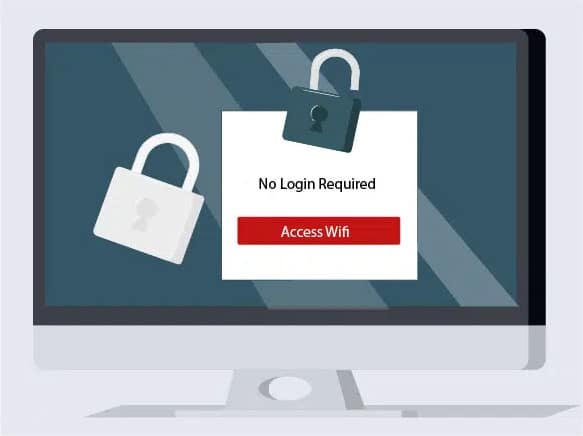
Password protect your wifi to prevent unwanted guests from using all your bandwidth.
Frequently Asked Questions
You can contact us directly at support@outerreachbroadband.com or 207-888-3911.
You should reach out to us directly at support@outerreachbroadband.com or call 207-888-3911. However, since we are constantly monitoring our network performance there is a good chance we will already be aware of any service issue before you are. In fact, if you are able to check your email you may already have a message from us with an update on the aforementioned service interruption and what we are doing to remedy the situation.
Yes. They can be found at https://outerreachbroadband.com/terms-of-service/.
Our servers are state-of-the-art and they are monitored 24/7 by trained professionals. We firmly believe in investing in the most reliable people and technology to ensure reliable and safe internet connectivity.
A critical part of our job is to be continually updating and modernizing our equipment and software to make sure we are on the forefront with security protocols. Furthermore, our fixed wireless connections require strict encryption software so we can provide you a secure and reliable connection.
While it is incumbent upon us as your trusted internet provider to ensure the safety and security of your connection you must also practice safe browsing and data transfer habits. We strongly encourage you to stay away from suspicious sites and to not open unknown or suspicious attachments as those both could have negative effects on both your system/hardware and ours as well.
Like you we are also customers of internet service providers (ISPs) in our homes and offices. Over the years we have found two trends from these ISPs: (1) they rarely produce the upload and download speeds that are advertised and (2) we are frequently told that we need higher speeds than we can actually use. Part of our goal at Outer Reach is to help educate the public on what internet speeds people actually need to live and perform their day-to-day routine from virtual school and working at home to streaming content.
We feel that ISPs have made gaining internet access more imposing and complicated than it must be. Our promise to you is to be upfront about the speeds we can deliver to your home and then deliver those speeds on a constant basis. You will notice that we do not offer lots of different speed and service tiers. This is because we want to provide all our customer, whether served by fiber to the home or fixed wireless connections, the highest throughput possible.
No. We do not believe in limiting the amount of data you can access.
The most common cause has to do with the amount of traffic (number of current users) on the internet. In the morning there are fewer people online. As the day goes by businesses and other users are becoming more active and the amount of internet traffic increases. This is due to the oversubscription ratio used in designing your network by your internet service provider(ISP).
Our support team will initially contact you ahead of time and schedule an installation appointment at a mutually convenient time. Depending on the service, fiber to the home or fixed wireless, installations typically take 2-3 hours. It is important to note that we will require an adult who can make decisions about the installation and authorize any work that may occur to be present for the installation.
For fiber you should expect a two part installation process. First a technician will need to install a drop cable to the side of your home from the closest utility pole. This will typically follow the same path as the power line which feeds your home. The cable will be managed similar to your other utility lines and will be housed in a small enclosure box on the outside of your home. This first stage can be installed without anyone present unless you prefer to be home during this part.
The second stage will require an adult who can accept our service contract to be home. In this stage we will extend the connection inside your home. In some cases we can repurpose an existing point of entry to manage the cable into a device so you can hardwire or connect all of your devices to wirelessly.
For fixed wireless service, upon arrival our technicians will begin surveying your property to discover the best and most reliable options for securing the wireless signal. Since our technology does not require a clear line of sight to the signal’s point of origin, in most cases we will be able to present you with multiple mount options for our small 10″ square outdoor unit. Once the final location has been determined, our technician will review the scope of work and options with you including the installation of a wirepath between the outdoor unit and an indoor unit that we will either hardwire or connect your devices to wirelessly. Once agreed upon the technician will install the necessary hardware and get your family connected.
Check our availability to see if we service your area.
For more details on the installation process, view our Customer Experience page.
It is key to place your WiFi router(s) in a central location(s) which will enable the signal to reach more effectively throughout your home. Placing your router(s) in heavily used rooms will more effectively deliver signals where it’s needed most. Furthermore, elevating your router away from the floor is a key element as WiFi signals travel outward and down. If your router is already on the floor your connection will suffer. Also, make sure to not hide your router behind or under large pieces of furniture. The signal won’t be strong enough to be effective.
-
Aside from your home’s connection to the internet, the performance of your home WiFi network by and large is determined by the quality and placement of your WiFi router(s) and/or extender(s). This is because a router or extender is the equipment transmitting data to/from your device (TV, phone, tablet etc.). Since this is the case you want to make sure that your router/extender is placed in a well thought out location. Certain materials and situations to avoid are as follows –
-
Mirrors: Mirrors and other reflective surfaces (i.e. metals) can deflect the signal away from your router which will weaken your data connection.
-
Brick/concrete/rock: WiFi signals typically do not travel through thick surfaces. If you have to place your router near a wall, plywood or drywall is a better target.
-
Certain electronic devices: Microwaves, certain communication devices and even refrigerators can emit low level electronic signals which will interfere with your router.
-
Bluetooth devices: These typically operate on the same frequency as your router and can interfere with your device’s connection to the router. Typical devices include video game equipment, computers, wireless stereo equipment and televisions.
The most common cause has to do with the amount of traffic (number of current users) on the internet. In the morning there are fewer people online. As the day goes by businesses and other users are becoming more active and the amount of internet traffic increases. This is due to the oversubscription ratio used in designing your network by your internet service provider(ISP).
Outer Reach connects to the internet through a high-speed fiber connection distributed via wired and wireless connections to our networks across Maine. A small radio antenna is installed onto the eave of your home for you to receive the internet connection from the Outer Reach network. This wireless transmitter/receiver creates a secure connection with one of our wireless towers. It captures an encrypted radio frequency, which then runs through your home using a fiber-optic cable, bringing internet to your location.
All of our networks operate with fiber which is the most efficient and effective way to transfer data. In some areas we offer a fiber to the home product which connects your home directly to the fiber hanging from the telephone poles on your street. This will always be the most effective way to deliver the highest speeds.
Our fixed wireless networks also rely on fiber to provide the essential connection for our radios and antennas which we place on towers to serve your home. While fixed wireless will also provide reliable connectivity and higher speeds than many other technologies, particularly DSL, which tend to be reliant on vast and antiquated infrastructure.
In the end, both delivery methods are state-of-the-art and will provide you with safe, reliable and fast connectivity.
Yes. Outer Reach does not favor any website or customer over another nor do we sell customer data to any third parties.
The “digital divide” concept is meant to represent the divide between areas that have reliable access to high-speed, reliable broadband internet services and those that do not.
High-speed, reliable broadband internet services, defined by the FCC, are a minimum of 25 megabits per second download and 3 megabits per second upload speeds. Many in the industry believe this is an artificially low estimate due to outdated data gathering methods. Microsoft estimates the number could be as high as 162 million Americans without high-speed internet access, as defined above.
We believe that the “digital divide” is an actual obstacle to growth, enrichment, and education across many of Maine’s communities. At Outer Reach, we intend to be a proactive business and thought leader in Maine by working towards bridging the “digital divide”.
Blog Post: Bridging the Digital Divide in Maine: The Case for Fixed Wireless Technology